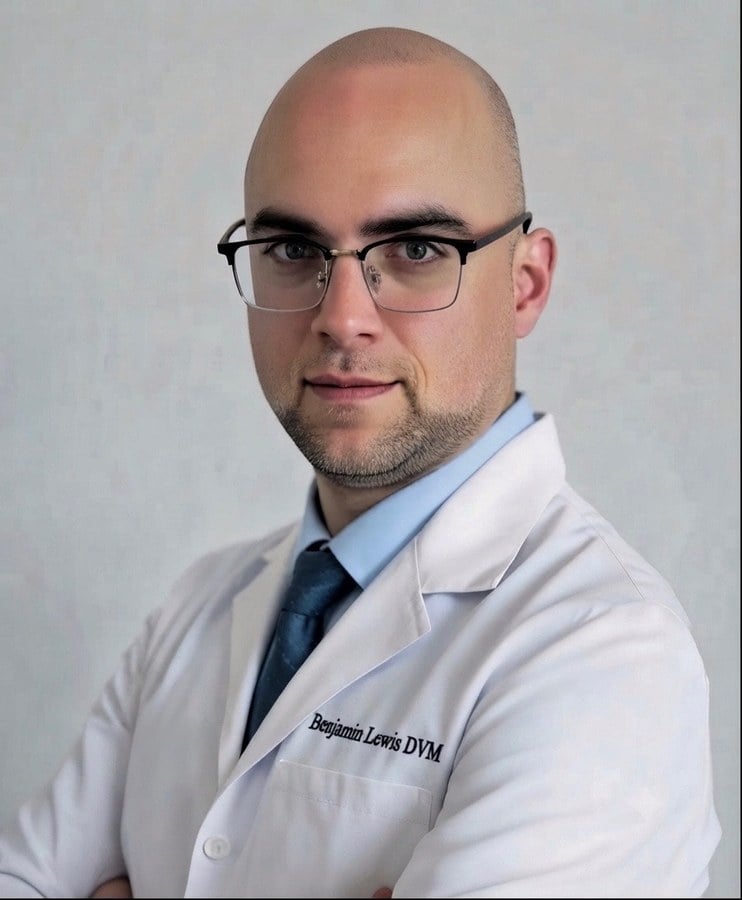
It’s really hard to find a vet who understands exotic animals, especially reptiles and fish. Dr. Lewis was knowledgeable, patient, and answered all my questions without rushing me. The mobile home visit was also incredibly convenient. I recommend them highly!
Tortoise house-call vet in Houston
Tortoises are seen at home across Greater Houston, with evening visits, 6:30–9 PM, every day. Dr. Benjamin Lewis, DVM, examines your tortoise and checks its indoor enclosure or backyard pen, lighting, heat and diet in place.
Nothing to pay now, invoice through our secure portal, CareCredit financing available (subject to credit approval).
$375 sick-pet home exam · $95 video visit
$50 of a paid video visit goes toward an in-home exam if you book the house call within 7 days.
We reply within 3 hours.

Texas license #20017
★★★★★ 5.0 on Google
Highly competent, hard working marine veterinarian. Dr Benjamin Lewis is excellent. I would trust him with any tropical fish/aquarium issue.
Dr Lewis came out to evaluate our bearded dragon enclosure. I did my own research but I wanted some guidance and reassurance that we were properly taking care of our new baby dragon. You can tell that Dr Lewis is very passionate about reptiles or all sorts and wants to make sure we as keepers and pet owners are taking care of our animals. I highly recommend Dr Lewis and we will use his services in the future for sure.
It’s obvious that Dr. Lewis is very passionate about his work and all the animals he cares for. Our veiled chameleon was extremely stressed, lethargic and not eating. We tried every trick in the book and even got some of his favorite mealworms, but to no avail. He seemed to be going downhill quickly and that’s when we made decision that he needed to be seen quickly. Dr. Lewis came by as soon as he could to examine and treat our sweet boy. We couldn’t be more grateful for the time and empathetic nature of Dr. Lewis and are so happy to have found a place we can rely on.
Dr. Lewis came for our koi. Treated it like a real patient, asked the right tank questions, and made the next steps obvious.
Why a house call makes sense for tortoises
Large tortoises are hard to move, and a lot of tortoise health comes down to lighting, heat, diet and the pen they live in.
No hauling a big tortoise
Adult sulcatas and other large tortoises are heavy and stressful to transport. A home visit skips the car ride.
The pen is part of the exam
Basking heat, UVB or sun access, shelter, shade, water and diet get checked where your tortoise lives, indoors or out.
Evening visits, 6:30–9 PM, every day
Visits are by appointment. If your tortoise is declining, call or text and you get a straight answer on the fastest option.
What a tortoise house call costs
A sick-animal in-home exam is $375; wellness visits for healthy pets cost less — ask us. A video visit is $95. $50 of a paid video visit goes toward an in-home exam if you book the house call within 7 days. No prescriptions from a first video visit. Texas law requires an in-person exam first. Nothing to pay now, invoice through our secure portal, CareCredit financing available (subject to credit approval). Add-ons are on the pricing page.
Sister pharmacy, separate job
When a veterinarian writes a compounded prescription for a tortoise, that fill is handled by sister pharmacy RaXnimal Veterinary Pharmacy reptile compounding. Scale & Fin is the house-call exam.
How a tortoise visit works
Tell us about your tortoise and the setup
Use the booking form, or call or text with what you are seeing. A photo of your tortoise and its enclosure or pen speeds this up.
You get the quote first
Anything extra is quoted before we do it.
Exam at the enclosure
Dr. Lewis examines the animal, reviews the enclosure, and leaves you with a written plan and next steps.
Common concerns in tortoises
These are reasons to ask for an exam, not diagnoses you can make from a photo. Tell us when a change started and whether other animals are affected.
- Shell problems. Soft spots, pitting, discolored or foul-smelling areas, cracks, or uneven growth. Injuries from dogs, lawn equipment or falls also need an exam.
- Metabolic bone disease. A soft shell or weak legs, often linked to UVB lighting, sun access or calcium in the diet.
- Respiratory infection. Nasal discharge, bubbles at the nose, wheezing or open-mouth breathing.
- Eye problems. Swollen, closed or crusty eyes.
- Not eating, or hibernation questions. Some species slow down or hibernate in cooler months, and others should not. Weight loss or a tortoise that will not eat in warm weather needs an exam. A check before a first hibernation is a good idea.
- Beak and nail overgrowth. An overgrown beak can make eating hard and is often tied to diet and surfaces.
- Egg retention. A female that is digging, restless or straining without laying should be seen.
Signs it is time to call a vet
- Discharge or bubbles from the nose, or open-mouth breathing
- Swollen or closed eyes
- A soft, cracked, bleeding or foul-smelling shell
- Not eating or losing weight when it should be active
- Straining, diarrhea, or no droppings
- Weakness, dragging legs or unusual lethargy
- Any injury from a dog, a fall or yard equipment
Habitat and husbandry checks done at your home
- Basking temperature and a warm-to-cool gradient, measured with a thermometer
- UVB bulb type, age and distance, or daily sun access outdoors
- Humidity and substrate suited to your species
- Shelter from heat, cold and rain, plus shade in Houston summers
- Shallow water dish your tortoise can get in and out of
- Pen fencing and digging barriers, and protection from dogs and wildlife
- Plants in the pen that a tortoise might eat
- Diet: greens, weeds or grasses, and any calcium supplement
- Weight records over time
How to prepare for the visit
- Leave the enclosure or pen set up as normal so the vet can see how your tortoise is actually kept.
- Have the UVB bulb type and roughly when it was installed.
- List the diet and any supplements, and how often you use them.
- Save a fresh stool sample if you have one.
- Have prior records and a recent weight ready if you have them.
Share the names of any medications, supplements or products already used. Do not start a treatment based only on this page. If your animal has severe breathing trouble, major bleeding or is unresponsive, seek an emergency hospital that sees exotics rather than waiting for a routine visit.
Your tortoise vet: Dr. Benjamin Lewis, DVM, MS
Dr. Lewis earned his Doctor of Veterinary Medicine from the University of Minnesota in 2023 and treats reptiles, amphibians, fish, invertebrates, and corals — exotics only. A great deal of tortoise medicine is husbandry, and a setup that is quietly wrong is easier to spot at the enclosure or in the yard.
Doctor of Veterinary Medicine, University of Minnesota 2023 · Texas license #20017Areas we serve
Tortoise vet house calls across Greater Houston, including Houston, Katy, Sugar Land, Richmond, Rosenberg, Fulshear, Missouri City, Stafford, Pearland, Manvel, Alvin, Friendswood, League City, Webster, Seabrook, Kemah, Dickinson, Pasadena, Deer Park, La Porte, Baytown, Channelview, Crosby, Bellaire, West University Place, Humble, Kingwood, Atascocita, Porter, Tomball, Magnolia, Conroe, Montgomery, The Woodlands, Spring, Cypress, Jersey Village, Hockley, Waller, Brookshire, Fresno and Needville. Travel is included within 18.5 miles; $4.50 per mile beyond.
Tortoise house-call questions
Do you come to my house for a tortoise?
Yes. Tortoises are seen at home across Greater Houston, with evening visits, 6:30–9 PM, every day, including tortoises kept in backyard pens. Dr. Benjamin Lewis, DVM, Texas license #20017, examines your tortoise and its setup in place.
Can you see a large sulcata at home?
Yes. Large tortoises are one of the best reasons for a house call, since there is no need to lift and transport them.
Which tortoises do you see?
Russian, sulcata, leopard, red-footed and Hermann’s tortoises, from hatchlings to large adults, in indoor enclosures and backyard pens. Aquatic turtles and box turtles are on our turtle vet page.
Should my tortoise hibernate?
It depends on the species and its health. Some species, like Russian tortoises, can brumate, but only when healthy and at a good weight. Sulcata tortoises shouldn't hibernate. Ask before a first brumation, and book a check if your tortoise is losing weight or has runny eyes or nose.
Can you do a video visit first?
Yes. A video visit is $95. No prescriptions from a first video visit. Texas law requires an in-person exam first. $50 of a paid video visit goes toward an in-home exam if you book the house call within 7 days. Nothing to pay now.
Do I pay when I book?
No. Nothing is paid at booking. We invoice through our secure portal. CareCredit financing available (subject to credit approval).
Do you check the enclosure or pen too?
Yes. Heat, UVB or sun access, shelter, water, diet and pen safety are checked in place during the home visit, with specific fixes.
Something wrong with your tortoise?
Send a photo and a short description. You will get a straight answer on whether it needs a visit.