Mobile exotic veterinary care across Greater Houston — evening visits, 6:30–9 PM, every day
House-call invertebrate vet · Houston

A Houston invertebrate vet who comes to the enclosure.

Tarantulas, scorpions, insects and hermit crabs need species-specific enclosures. Reef invertebrates need stable water conditions. Dr. Benjamin Lewis makes house calls for invertebrates across Greater Houston, with evening visits, 6:30–9 PM, every day.

$95 video visit · $375 sick-pet home exam · Nothing to pay when you book

We reply within 3 hours.

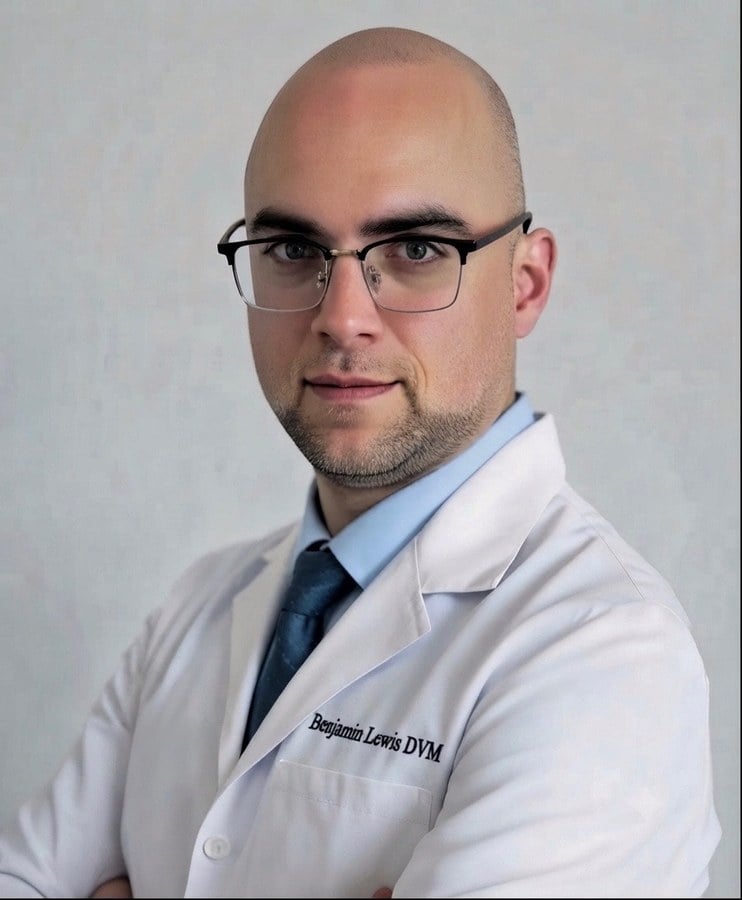
Dr. Benjamin Lewis, DVM, MS
Texas license #20017
★★★★★ 5.0 on Google
Steven M. ★★★★★

It’s really hard to find a vet who understands exotic animals, especially reptiles and fish. Dr. Lewis was knowledgeable, patient, and answered all my questions without rushing me. The mobile home visit was also incredibly convenient. I recommend them highly!

Charles K. ★★★★★

Highly competent, hard working marine veterinarian. Dr Benjamin Lewis is excellent. I would trust him with any tropical fish/aquarium issue.

Jonathan A. ★★★★★

Dr Lewis came out to evaluate our bearded dragon enclosure. I did my own research but I wanted some guidance and reassurance that we were properly taking care of our new baby dragon. You can tell that Dr Lewis is very passionate about reptiles or all sorts and wants to make sure we as keepers and pet owners are taking care of our animals. I highly recommend Dr Lewis and we will use his services in the future for sure.

Kristen H. ★★★★★

It’s obvious that Dr. Lewis is very passionate about his work and all the animals he cares for. Our veiled chameleon was extremely stressed, lethargic and not eating. We tried every trick in the book and even got some of his favorite mealworms, but to no avail. He seemed to be going downhill quickly and that’s when we made decision that he needed to be seen quickly. Dr. Lewis came by as soon as he could to examine and treat our sweet boy. We couldn’t be more grateful for the time and empathetic nature of Dr. Lewis and are so happy to have found a place we can rely on.

Julie Y. ★★★★★

Dr. Lewis came for our koi. Treated it like a real patient, asked the right tank questions, and made the next steps obvious.

Evening visits, 6:30–9 PM, every day House-call invertebrate exam Greater Houston house calls

Why a house call is the point for invertebrates

Moving an invertebrate is often the risk. Temperature, humidity, substrate depth and ventilation live where the animal lives.

Transport changes the patient

A house call avoids unnecessary handling and lets Dr. Lewis review the enclosure, molt history or reef system in place.

The enclosure is part of the exam

Temperature, humidity, substrate depth and ventilation get checked in place. With invertebrates those are rarely separate from the animal.

Evening visits, 6:30–9 PM, every day

Visits are by appointment. If an animal is declining, call or text and you get a straight answer on the fastest option.

What an invertebrate house call costs

A virtual sick-animal visit is $95. No prescriptions from a first video visit. Texas law requires an in-person exam first. After that exam, video rechecks can include medication when appropriate. A standard sick-invertebrate home visit is $375 in the Houston area; an enclosure evaluation is $295. Nothing to pay when you book. We'll send your invoice separately through our secure client portal. CareCredit financing available (subject to credit approval). Travel is included within 18.5 miles; $4.50 per mile beyond. Add-ons are on the pricing page. Email support@scalefinveterinary.com or call (832) 987-3469.

Sister pharmacy, separate job

When a veterinarian writes a compounded prescription for an invertebrate, that fill is handled by sister pharmacy RaXnimal Veterinary Pharmacy invertebrate compounding. Scale & Fin is the house-call exam.

How an invertebrate visit works

1

Tell us the species and the setup

Use the booking form, or call or text with the species and what you are seeing. A photo of the animal and the enclosure speeds this up.

2

You get the quote first

Anything extra is quoted before we do it.

3

Exam at the enclosure

Dr. Lewis examines the animal, reviews the enclosure, and leaves you with a written plan and next steps.

Book online Text a photo

Common concerns in invertebrates

These are reasons to ask for an exam, not diagnoses you can make from a photo. Tell us when a change started and whether other animals are affected.

  • Molting problems. A tarantula stuck partway out of its old skin, or a hermit crab disturbed while molting.
  • Dehydration. A shrunken abdomen or sluggish behavior.
  • Falls and injuries. Abdominal ruptures in tarantulas, and leg injuries.
  • Parasites and mites. Small moving specks on the animal or in the enclosure.
  • Hermit crab shell and water issues. Spare shells, fresh water and salt water.
  • Reef invertebrate losses. Shrimp, crabs, snails and anemones are sensitive to swings in water parameters and to some medications.

How to prepare for your invertebrate visit

  • Note the temperature and humidity, and when the water dish was last refreshed.
  • Note the date of the last molt and when the animal last ate.
  • For reef invertebrates, have your recent water tests, including salinity.
  • Don't disturb an animal that looks like it's molting.
  • Take photos or videos of what you're seeing.

Share the names of any medications, supplements or products already used. Do not start a treatment based only on this page. If your animal has severe breathing trouble, major bleeding or is unresponsive, seek an emergency hospital that sees exotics rather than waiting for a routine visit.

Your invertebrate vet: Dr. Benjamin Lewis

Dr. Lewis earned his Doctor of Veterinary Medicine from the University of Minnesota in 2023 and treats reptiles, amphibians, fish, and invertebrates. A great deal of invertebrate medicine is husbandry, and a setup that is quietly wrong is easier to spot at the enclosure.

More about Dr. Lewis →

Doctor of Veterinary Medicine, University of Minnesota 2023 · Texas license #20017
Areas we serve

Invertebrate vet house calls across Greater Houston, including Houston, Katy, Sugar Land, Richmond, Rosenberg, Fulshear, Missouri City, Stafford, Pearland, Manvel, Alvin, Friendswood, League City, Webster, Seabrook, Kemah, Dickinson, Pasadena, Deer Park, La Porte, Baytown, Channelview, Crosby, Bellaire, West University Place, Humble, Kingwood, Atascocita, Porter, Tomball, Magnolia, Conroe, Montgomery, The Woodlands, Spring, Cypress, Jersey Village, Hockley, Waller, Brookshire, Fresno and Needville. Travel is included within 18.5 miles; $4.50 per mile beyond.

Invertebrate house-call questions

Do you make house calls for invertebrates in Houston?

Yes. Invertebrates are seen at home across Greater Houston, with evening visits, 6:30–9 PM, every day. Travel is included within 18.5 miles; $4.50 per mile beyond.

What does an invertebrate house-call exam cost?

$375 sick-animal in-home exam; wellness visits for healthy pets cost less — ask us. $95 video visit. Nothing to pay when you book.

Can you prescribe from a virtual visit?

Not on a first virtual visit. Texas Occupations Code §801.351 and Board Rule 573.68: a veterinarian-client-patient relationship cannot be established by telephone or video. Without an in-person exam first, we cannot prescribe. After that exam, a virtual recheck can.

When do house-call visits happen?

Scale & Fin is an appointment-based house-call practice. Evening visits, 6:30–9 PM, every day, booked online.

Which invertebrates do you see?

Tarantulas, scorpions, insects, hermit crabs, and most saltwater invertebrates such as shrimp, crabs, snails, and anemones. A photo of the animal and the enclosure speeds the booking.

Do you fill compounded invertebrate medications?

Compounded prescriptions, when your veterinarian writes one, are filled by sister pharmacy RaXnimal Veterinary Pharmacy. Scale & Fin is the house-call exam.

My tarantula is lying on its back. Is it dying?

Lying on the back can be normal during a tarantula molt. Do not touch, turn over or move it, and remove live prey. Send a photo and ask for advice if you are unsure; do not try to pull the animal from its old skin.

Why won't my tarantula eat?

Tarantulas often stop eating for weeks before a molt. Remove uneaten live prey, because crickets and other prey can injure a molting tarantula.

Can I treat my reef tank with fish medication?

Check first. Copper-based fish medications are toxic to shrimp, crabs, snails and corals, so they shouldn't go into a reef tank.

Do you see invertebrates in Katy, Sugar Land and Richmond?

Yes. House calls cover Greater Houston, including Katy, Sugar Land, Richmond, Cypress, Pearland and The Woodlands. Travel is included within 18.5 miles; $4.50 per mile beyond.

Do I pay when I book?

No. Nothing is paid at booking. We invoice through our secure portal. CareCredit financing available (subject to credit approval).

Do you check the enclosure or water too?

Yes. Temperature gradients, humidity and UVB for terrestrial setups, and pH and water chemistry for aquatic ones, are checked in place during the home visit, with specific fixes.

Something wrong with your invertebrate?

Send a photo and a short description. You will get a straight answer on whether it needs a visit.